Landed House vs Apartment: Which Is Better for Long-Term Investment?
Landed house or apartment — which delivers better long-term returns in Indonesia? This data-driven 2026 guide compares capital gain, rental yield, liquidity, ownership costs, and market trends to help you decide.
Landed House vs Apartment: Which Is Better for Long-Term Investment?
It's one of the most common dilemmas facing property investors in Indonesia today: should you put your money into a landed house or an apartment? The landed house feels like the safe, time-tested choice. The apartment promises accessibility, lower entry costs, and attractive rental yields. But which one actually delivers better returns over the long run?
There is no single answer that works for everyone. Both asset types have distinct investment profiles — different strengths, different risks, and different ideal use cases. The right choice depends heavily on your financial goals, investment horizon, risk tolerance, and the specific location of the property. This article breaks down the comparison thoroughly, grounded in 2026 market data, so you can make a genuinely informed decision.
The Fundamental Difference: What Are You Actually Buying?
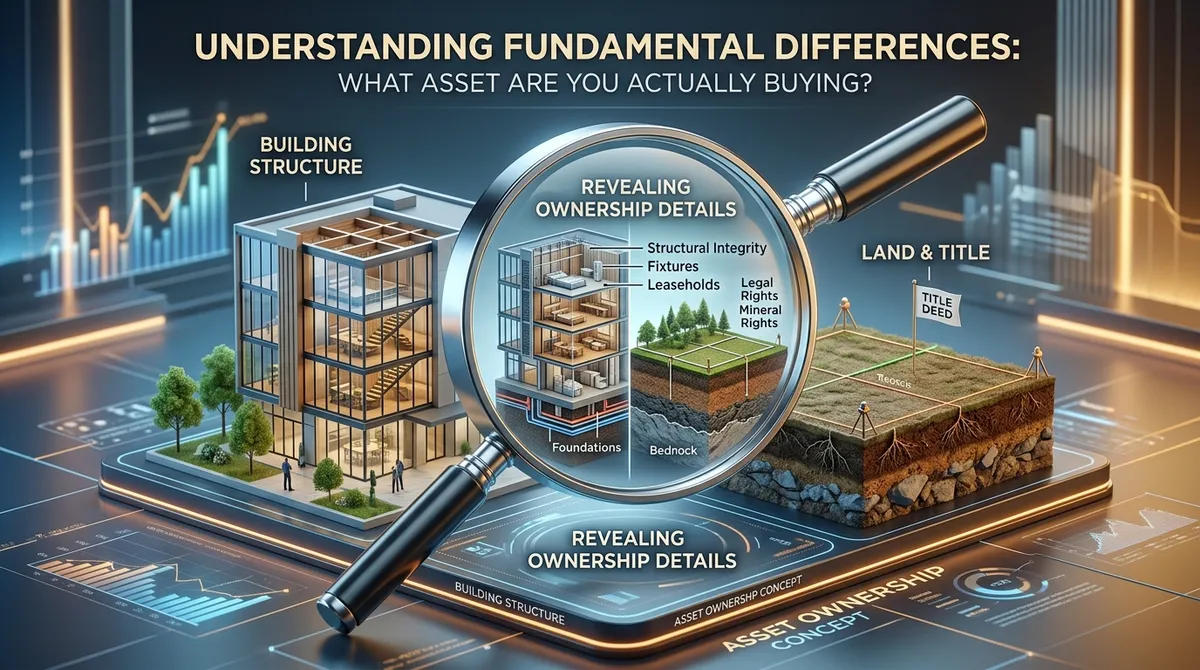
Before comparing returns, it's essential to understand the legal ownership distinction between these two property types.
A landed house gives you full ownership of both the building and the land it sits on. The legal status is a Sertifikat Hak Milik (SHM) — the strongest form of property ownership under Indonesian law, with no expiry date. You have complete freedom to renovate, extend, or rebuild the structure at any time without seeking anyone else's approval.
An apartment gives you ownership of the unit space only (Strata Title). Everything outside your unit — the building's foundation, corridors, lifts, swimming pool, communal gardens, and the land the building stands on — is collectively owned and managed by the building management. The land's legal status is typically Hak Guna Bangunan (HGB), a time-limited right of use that can be renewed but carries more legal uncertainty over multi-decade horizons.
This is not just a technicality. It directly shapes the appreciation potential, flexibility, and long-term risk profile of each asset.
Comparison 1: Capital Gain — Which One Appreciates More?
When it comes to long-term capital appreciation, landed houses have consistently outperformed apartments in the Indonesian property market.
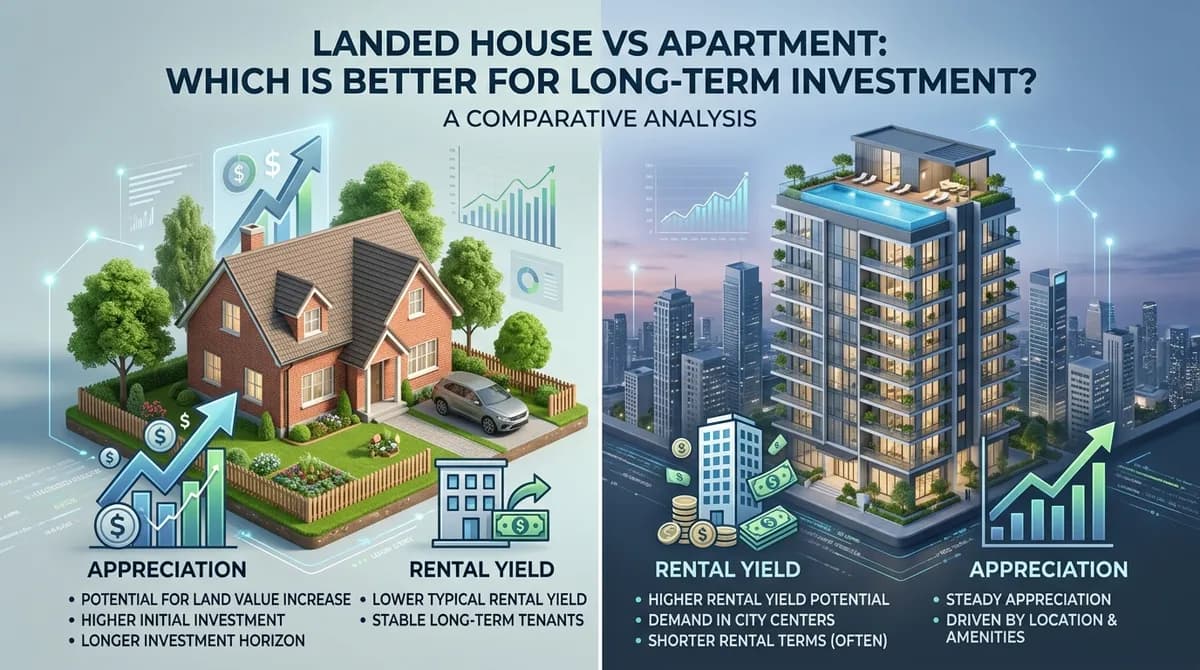
Based on market data collected from January 2025 through March 2026, landed house prices in major Indonesian cities recorded average annual growth of 5%–7% for type 36/45 properties. Apartment units (studio and 2-bedroom types), on the other hand, only grew at 2%–4% per year — and some market segments are experiencing downward price pressure due to oversupply.
The reason is structural. A landed house comes with land ownership, and land is inherently finite. Its quantity never increases while population and demand continue to grow. This natural scarcity is the engine behind landed property's long-term appreciation that apartments simply cannot replicate.
Apartments, by contrast, compete with a continuous supply of new units entering the market. Data from Colliers Q2 2025 recorded approximately 27,000 unsold apartment units in Jakarta alone — a supply overhang that suppresses resale values and makes it increasingly difficult for investors to exit at a profit, particularly in older buildings.
Winner: Landed House — for consistent, long-run capital appreciation driven by land scarcity.
Comparison 2: Rental Yield — Where Apartments Fight Back
Despite losing on capital gain, apartments take a clear lead when it comes to rental income potential.
Apartments in strategic locations near CBD areas, major office districts, or mass transit stations can generate rental yields of 6%–10% per year. This is significantly higher than the typical 3%–5% per year yield from landed houses.
The logic is straightforward: apartments target a specific renter profile — young professionals, single urban workers, or expatriate employees — who place a premium on location and shared amenities like gyms, pools, and 24-hour security. This segment is willing to pay above-market rents for convenience and lifestyle.
However, there's an important caveat that many first-time investors overlook: those 6%–10% figures represent gross yield. After deducting monthly IPL (building maintenance fees), rental income tax, property management fees, and vacancy periods, the net yield can fall to 3%–5% — barely better than a landed house, but with significantly higher operational costs and more moving parts to manage.
That said, apartment rental values in Jakarta's CBD saw a notable surge of up to 12% in 2026 as full-time office attendance returned as the dominant work model. This represents a genuine opportunity window for investors already holding units in prime locations.
Winner: Apartments — for passive rental income in the short-to-medium term, especially in high-demand urban locations.
Pemberitahuan Redaksi (Editorial Disclosure)
Artikel di PropertyID disusun melalui proses riset dan penulisan berbantuan teknologi, kemudian ditinjau dan divalidasi oleh tim redaksi sebelum dipublikasikan untuk memastikan keakuratan informasi, khususnya terkait data regulasi, simulasi finansial, dan ketentuan perbankan yang berlaku.
Tim Redaksi
Tim redaksi PropertyID menyajikan berita, analisis, dan panduan properti terpercaya.