Apartment: Rent or Buy for Investment — Which Generates More Returns in 2026?
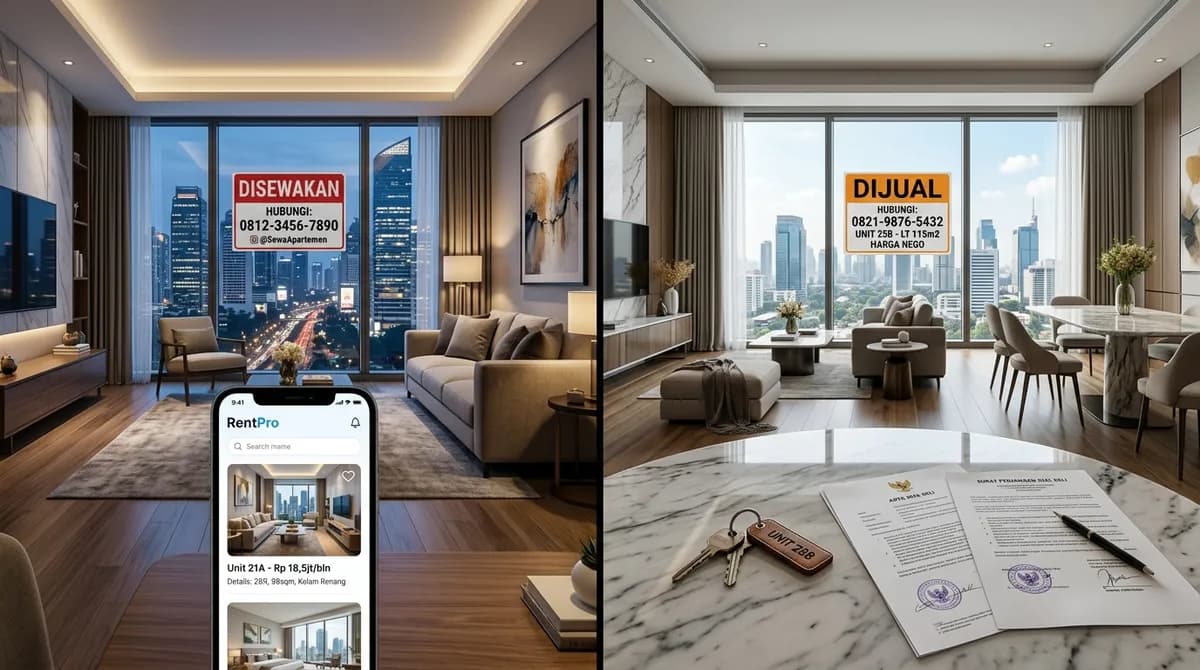
Should you buy an apartment to rent out or rent a unit while investing capital elsewhere? This 2026 data-driven guide compares both strategies: gross yield 4–6.5%, realistic net yield, IPL risk, oversupply conditions, and a practical framework to choose the right path for your financial profile.
Apartment: Rent or Buy for Investment — Which Generates More Returns in 2026?
As property prices continue their upward trajectory and interest rates remain in a state of cautious adjustment, one question keeps surfacing among prospective apartment investors: is it more profitable to own a unit and rent it out, or to rent a place to live while deploying capital into other instruments?
The answer is far more nuanced than most conversations about property suggest. Both strategies carry distinct return profiles, risk structures, and market conditions that make them more or less appropriate depending on who is asking the question. This article breaks down both sides objectively — grounded in actual 2026 market data — so you can make a decision based on numbers rather than assumptions.
The 2026 Apartment Market: Reading the Signal Before Choosing a Strategy
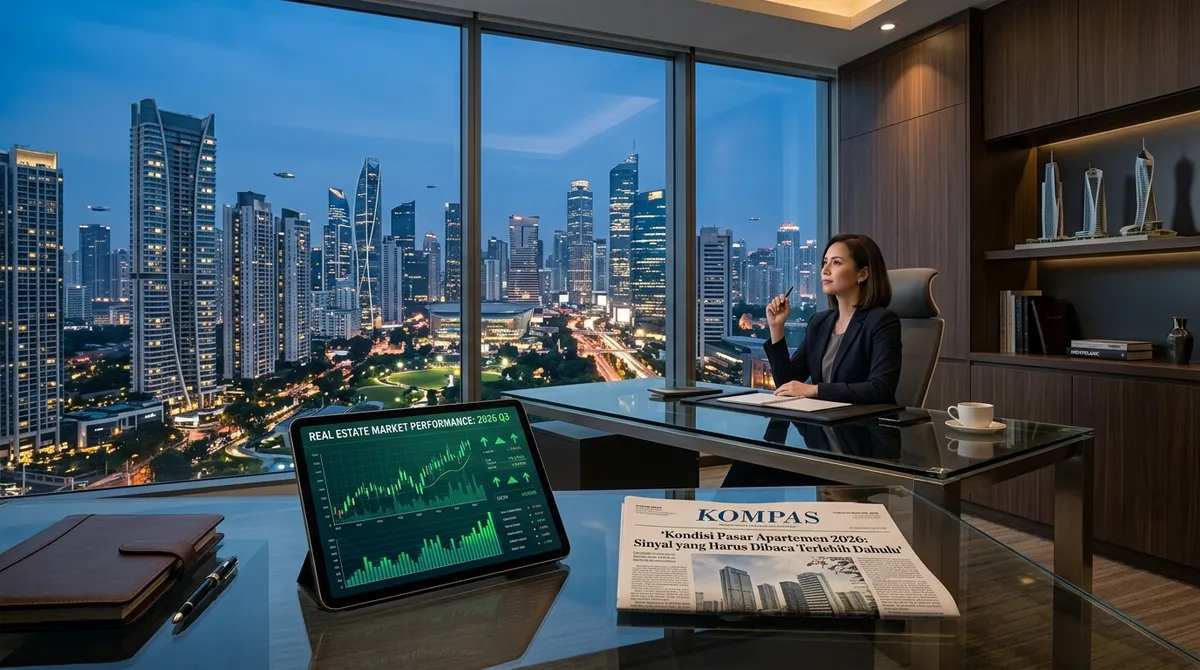
Before comparing strategies, the market context needs to be understood clearly. Bank Indonesia's data for Q1 2026 shows that the Residential Property Price Index for the primary market grew only 0.62% year-on-year, down from 0.83% in Q4 2025. Primary residential property sales also fell 25.67% annually after previously growing 7.83% in Q4 2025. This data signals a clear message: investors can no longer rely solely on capital gain as their primary return engine.
The era of buying an apartment, holding it passively, and selling at a large profit margin is no longer a reliable default strategy. 2026 belongs to the income investor — someone who pursues steady rental cash flow as the foundation of their return, with capital appreciation as a secondary bonus rather than the main thesis.
But this does not automatically mean buy-to-let always beats renting and investing elsewhere. Let's examine both strategies with structural rigor.
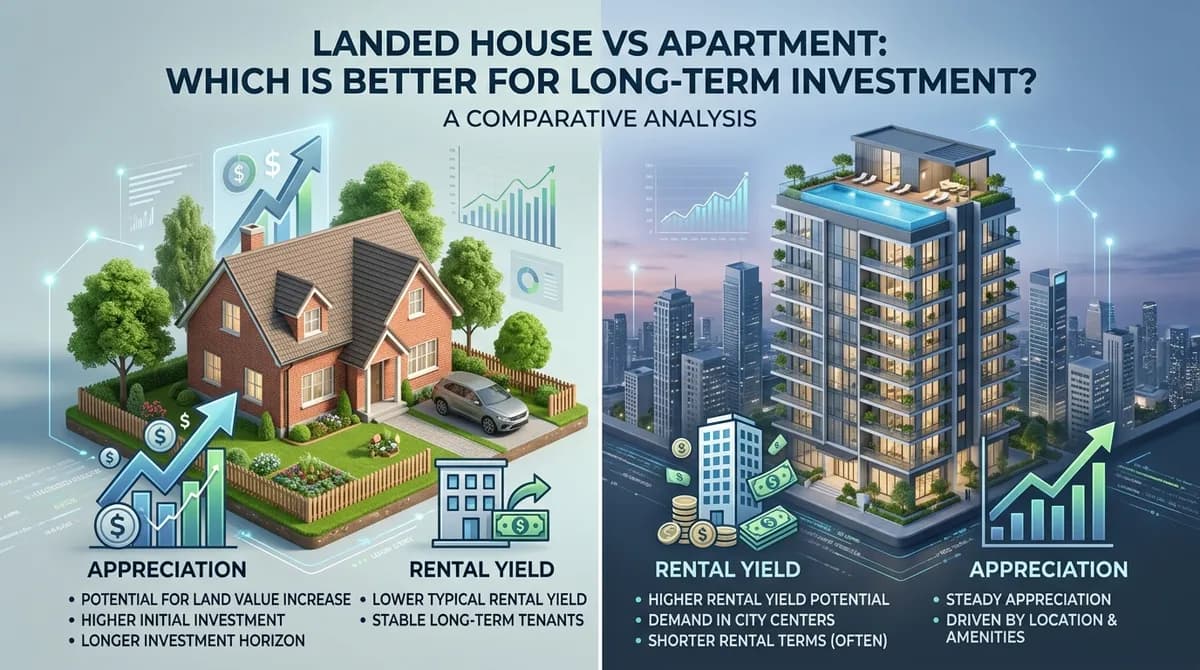
Strategy 1: Buy an Apartment Unit to Rent Out (Buy-to-Let)
Core Advantages
Predictable passive income. The primary appeal of buy-to-let is a recurring income stream that operates independently of your active working hours. A well-placed unit in a high-demand area generates monthly or annual income with minimal day-to-day effort once tenants are in place.
Inflation protection through a physical asset. Real property consistently maintains its real value over long time horizons. Rental rates also tend to rise with inflation annually, preserving the purchasing power of your income stream in a way that fixed-rate financial instruments cannot match.
Bank leverage working in your favor. Indonesian banks in 2026 are actively competing for apartment mortgage (KPA) customers, offering competitive fixed rates for the first 3 to 5 years. For investors using leverage, a period of stable rates is an ideal window to lock in installment costs and widen the margin between borrowing costs and rental income.
The 2026 PPN DTP incentive. The government formally extended its Value Added Tax borne by the government policy through PMK No. 90/2025, covering the full calendar year 2026. This means buyers of new apartments from developers do not need to pay the 11% VAT on qualifying units — effectively lowering the purchase price significantly and improving the entry-level economics of new apartment investments.
The Numbers You Need to Know
Average rental yield in Jakarta in 2026 sits at approximately 4% -- 6.5% gross and 2.3% -- 4.5% net per year, with variation depending on location, unit type, and management approach.
The benchmark to watch: for a unit priced at IDR 500 million, ensure it can generate at least IDR 30–35 million in gross annual rent (a 6%+ gross yield). If it cannot, the capital might generate better returns in alternative instruments.
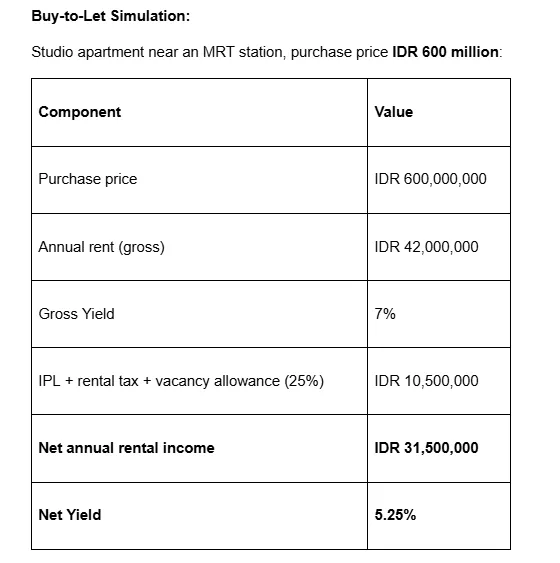
Adding estimated capital appreciation of 3%–4% per year in a strategic location, total annual return can reach 8%–9% — a competitive figure for an instrument with relatively manageable risk.
Risks That Must Be Factored In
Oversupply depressing rents. In several Jakarta corridors and major cities, the continuous supply of new units strengthens tenants' bargaining position. Landlords in oversupplied areas face downward pressure on rents and longer vacancy periods — reducing the effective yield even when the unit is attractively priced.
IPL fees eroding yield regardless of occupancy. Building maintenance fees (IPL) for mid-range to premium apartments range from IDR 2 to 5 million per month. This is a fixed obligation payable even when the unit sits empty — a cost that beginning investors systematically underestimate.
Building depreciation after 10–15 years. Unlike landed houses where land value underpins long-term appreciation, apartment units experience building depreciation as the structure ages. An older building with unmaintained facilities struggles to compete with newer developments in the same area, which suppresses both resale value and achievable rent.
Vacancy risk. A single month of vacancy in a unit renting at IDR 4 million per month costs IDR 4 million in lost income — roughly 9.5% of the unit's annual gross rent. Two to three months of vacancy per year can reduce net yield by 15%–25% from projections.
Strategy 2: Rent Your Living Space, Invest Capital Elsewhere
This strategy is frequently overlooked in property discussions yet carries a financial logic that deserves serious attention.
The premise is straightforward: instead of locking hundreds of millions of rupiah into a down payment and acquisition costs for an apartment unit, you rent a place to live and deploy that capital into other investment instruments — equity mutual funds, bonds, land plots in developing corridors, or REITs.
When This Strategy Makes More Financial Sense
When career mobility is still high. If you are in a phase where professional opportunities may require relocating to another city within 2–3 years, owning an apartment unit can become a financial anchor rather than an asset. Selling quickly often means absorbing transaction costs and potentially taking a price cut to close the deal.
When purchase prices are already too premium relative to rental yield. In parts of Jakarta, the price per square meter of certain apartment segments has reached levels where gross yield from renting falls below 5%. Secondary market apartments in Indonesia generally appreciate at only 2%–4% per year. When both capital gain and rental yield are modest, capital deployed in growth-oriented financial instruments can generate superior returns over equivalent time horizons.
When the rent-to-ownership-cost gap is significant. This is the most practically compelling calculation. If renting an equivalent unit costs IDR 3 million per month while owning it (factoring in KPA installment plus IPL) costs IDR 6–7 million per month, the IDR 3–4 million monthly difference — consistently invested — can compound into substantial wealth over a decade.
Its Core Weakness
This strategy only works if you actually invest the capital difference with consistency and discipline. If the down payment that wasn't spent quietly migrates into lifestyle consumption rather than investment, no long-term financial benefit is captured. Additionally, renting builds zero equity — every rupiah paid to a property owner leaves nothing in your own asset column.
Pemberitahuan Redaksi (Editorial Disclosure)
Artikel di PropertyID disusun melalui proses riset dan penulisan berbantuan teknologi, kemudian ditinjau dan divalidasi oleh tim redaksi sebelum dipublikasikan untuk memastikan keakuratan informasi, khususnya terkait data regulasi, simulasi finansial, dan ketentuan perbankan yang berlaku.
Bambang Prakoso, S.H., M.Kn.
Bambang Prakoso adalah notaris dan PPAT aktif dengan pengalaman lebih dari 10 tahun menangani legalitas transaksi properti. Ia aktif membagikan panduan hukum terkait sertifikasi tanah, akta jual beli, dan penyelesaian sengketa properti.