
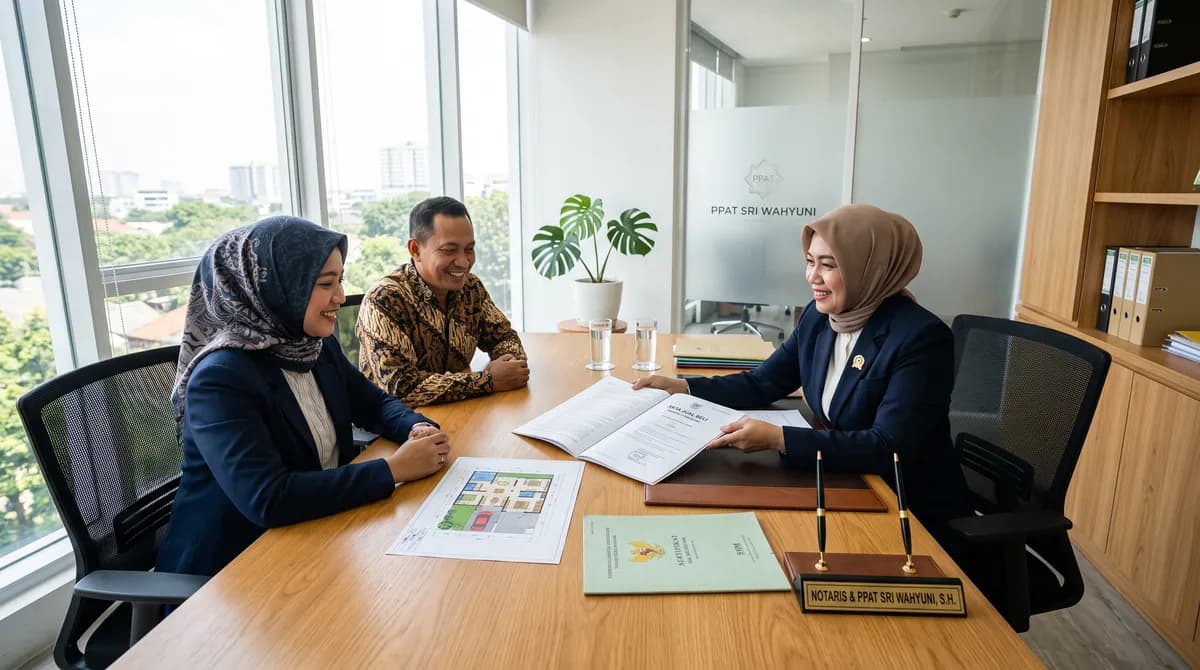

Inheriting Land Without a Certificate: Legal Steps to Take
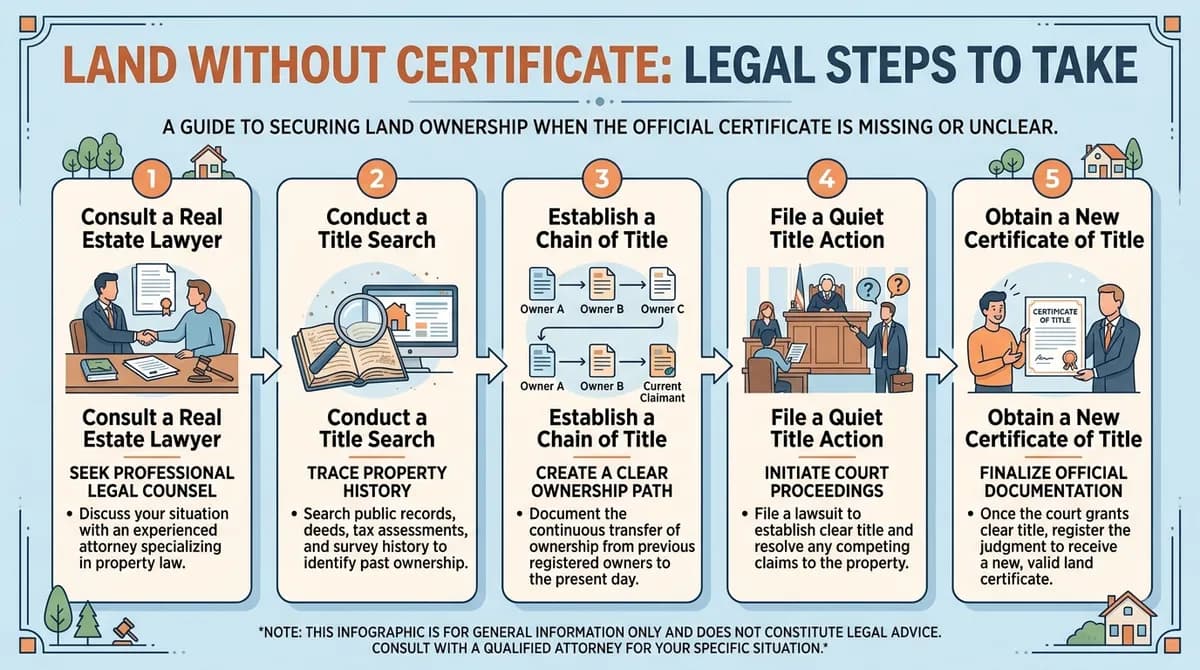
Inherited land without a certificate? Learn the complete legal steps, from family deliberation and the certificate of inheritance to the BPN certificate transfer process.
Inheriting Land Without a Certificate: The Legal Steps You Need to Take
Inheriting land from parents or family members is a common occurrence in Indonesia. However, in many cases, the inherited land turns out to have no official certificate at all — only a girik, petok D, or other unregistered proof of possession that has never been recorded with the National Land Agency (BPN). This situation often leaves heirs unsure where to begin, especially since land without a certificate carries much higher legal risk of disputes compared to land that's already certified.
Why Is Inherited Land Without a Certificate Risky?
Land that hasn't been certified essentially lacks strong legal standing as proof of ownership under Indonesia's modern land registration system. The risks involved include overlapping claims from other parties, the possibility that the land actually falls under state-owned territory, and difficulty proving ownership if disputes arise among heirs down the road. That's why handling the legal status of inherited land as early as possible is an important step to protect heirs' rights.
Step 1: Family Deliberation and Agreement Among Heirs
Before dealing with legal matters, the first essential step is holding a family deliberation to agree on how the inheritance will be distributed. This agreement is important to avoid future disputes and serves as the foundation for the subsequent legal process, including drafting the Certificate of Inheritance.
Step 2: Obtaining a Certificate of Inheritance (SKW)
The Certificate of Inheritance is a crucial document proving who is entitled to the inheritance. The process for obtaining it varies depending on the heirs' citizenship status and background:
For indigenous Indonesian citizens, the Certificate of Inheritance is typically drawn up before the Village Head or Sub-district Head, then confirmed by the local District Head.
For heirs of Chinese descent, the Certificate of Inheritance is usually prepared through a notary.
For Muslim heirs, the determination of heirs can be obtained through an Inheritance Ruling from the local Religious Court, particularly when disputes require an official legal decision.
Step 3: Converting the Land Status Into an Official Certificate
Once the Certificate of Inheritance is issued, the next step is registering the land with the BPN to obtain an official certificate, whether a Freehold Certificate (SHM) or another certificate type depending on the land's designation. This process generally requires supporting documents such as:
Girik, petok D, or other proof of land ownership or possession.
The validated Certificate of Inheritance.
A no-dispute statement from the local village or sub-district office.
Proof of Land and Building Tax (PBB) payment for the land.
Land re-measurement results conducted by BPN officials.
Step 4: Settling Inheritance Tax Obligations
The process of transferring ownership or registering inherited land also involves tax obligations, particularly the Land and Building Rights Acquisition Duty (BPHTB) for inheritance, which typically carries a different rate compared to regular sale transactions. Some regions even offer special relief for inheritance-related BPHTB, so it's important for heirs to check local tax policies.
Step 5: The Certificate Transfer Process
Once all documents are complete and tax obligations are settled, the certificate transfer process can be carried out through a Land Deed Official (PPAT) or directly at the local BPN office. This stage marks the final determination of the land's legal status, with the rightful heir's name officially recorded as the new owner on the land certificate.
What Happens If a Dispute Arises Among Heirs?
If family deliberation fails to reach an agreement, resolution can be pursued through legal channels — either through the District Court for general inheritance disputes, or the Religious Court specifically for Muslim heirs. This legal process typically takes longer and involves additional costs, making a family-based resolution the more ideal option whenever possible.
Common Challenges Faced by Heirs
Incomplete ownership history, especially if the land has changed hands across several generations without clear documentation.
Heirs whose whereabouts are unknown, which can delay the process of reaching an agreement on inheritance distribution.
Land partially occupied by other parties, whether legally or illegally, requiring additional legal steps to confirm ownership status.
Lack of understanding of administrative procedures, causing many heirs to delay handling the legal status of inherited land for years.
Tips for Handling Land Inheritance Without a Certificate
Hold a family deliberation as soon as possible once the inheritance process begins, to avoid prolonged disputes down the road.
Gather all supporting documents early, including old proof of ownership and land tax payment history.
Use a trusted notary or PPAT to ensure the entire process follows the applicable legal procedures.
Check local BPHTB inheritance relief policies, as some regions offer special incentives for inheritance transfers.
Don't delay the certificate transfer process, as the longer it's postponed, the greater the risk of disputes or loss of supporting documents.
Conclusion
Handling inherited land without a certificate does require a longer process compared to land that's already officially certified — starting from family deliberation, obtaining the Certificate of Inheritance, to converting the land into an official certificate through the BPN. However, with the right steps and complete documentation, heirs can ensure their ownership rights to the inherited land are legally protected, while avoiding the risk of future disputes.
Pemberitahuan Redaksi (Editorial Disclosure)
Artikel di PropertyID disusun melalui proses riset dan penulisan berbantuan teknologi, kemudian ditinjau dan divalidasi oleh tim redaksi sebelum dipublikasikan untuk memastikan keakuratan informasi, khususnya terkait data regulasi, simulasi finansial, dan ketentuan perbankan yang berlaku.
Bambang Prakoso, S.H., M.Kn.
Bambang Prakoso adalah notaris dan PPAT aktif dengan pengalaman lebih dari 10 tahun menangani legalitas transaksi properti. Ia aktif membagikan panduan hukum terkait sertifikasi tanah, akta jual beli, dan penyelesaian sengketa properti.