
New Infrastructure Projects That Drive Up Land Prices
Toll roads, MRT, LRT, and Indonesia's new capital plan have proven capable of driving up surrounding land prices by hundreds of percent. Learn the patterns and investment tips before prices climb even higher.
New Infrastructure Projects That Drive Up Surrounding Land Prices
One of the open secrets in property investment is that new infrastructure can change an area's fortunes within just a few years, sometimes even months. From toll roads and rail lines to plans for relocating a country's capital, these major projects have proven capable of significantly driving up land prices in surrounding areas. Understanding this pattern can be key for prospective investors and homebuyers looking to make more strategic decisions.
Why Does Infrastructure Have Such a Strong Impact on Land Prices?
Infrastructure is one of the most significant drivers of land price increases, as the construction of toll roads, MRT/LRT stations, or new airports directly improves an area's accessibility. The easier a location becomes to reach, the greater the potential for economic activity in that area, which in turn drives up demand for property and land nearby.
Toll Roads: A Classic Trigger for Land Price Increases
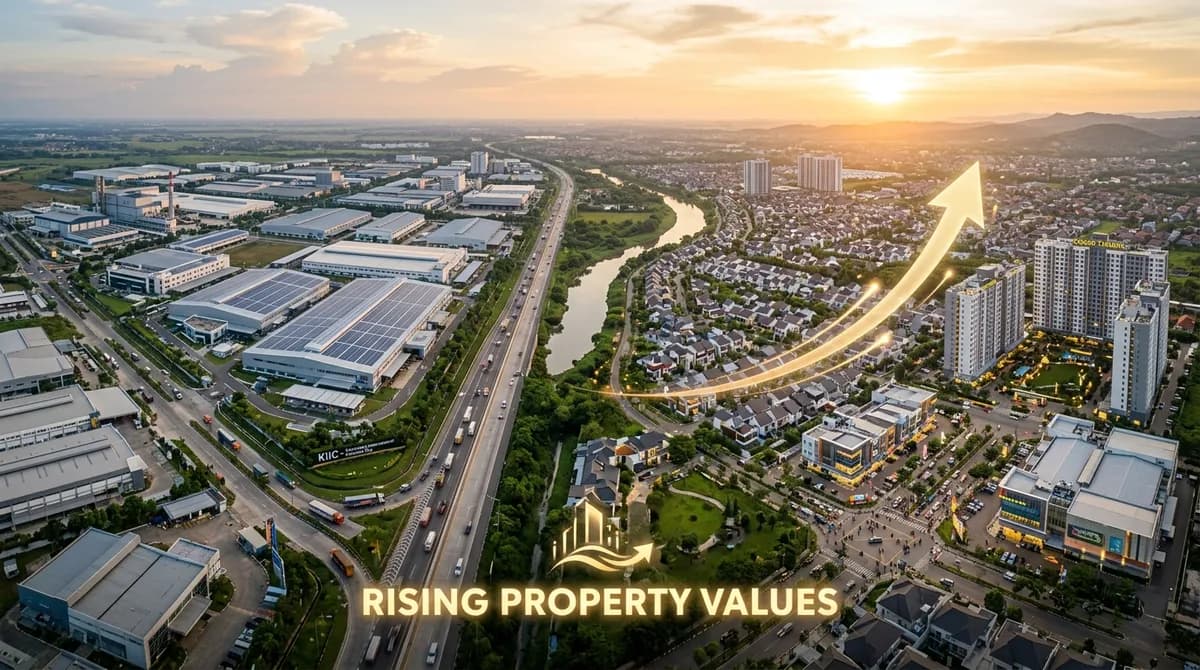
Historically, several buffer areas around Jakarta, such as Cikarang and Serpong, have seen rapid development after toll road access in those regions was expanded. A similar pattern tends to repeat itself in various satellite cities once toll road infrastructure is completed.
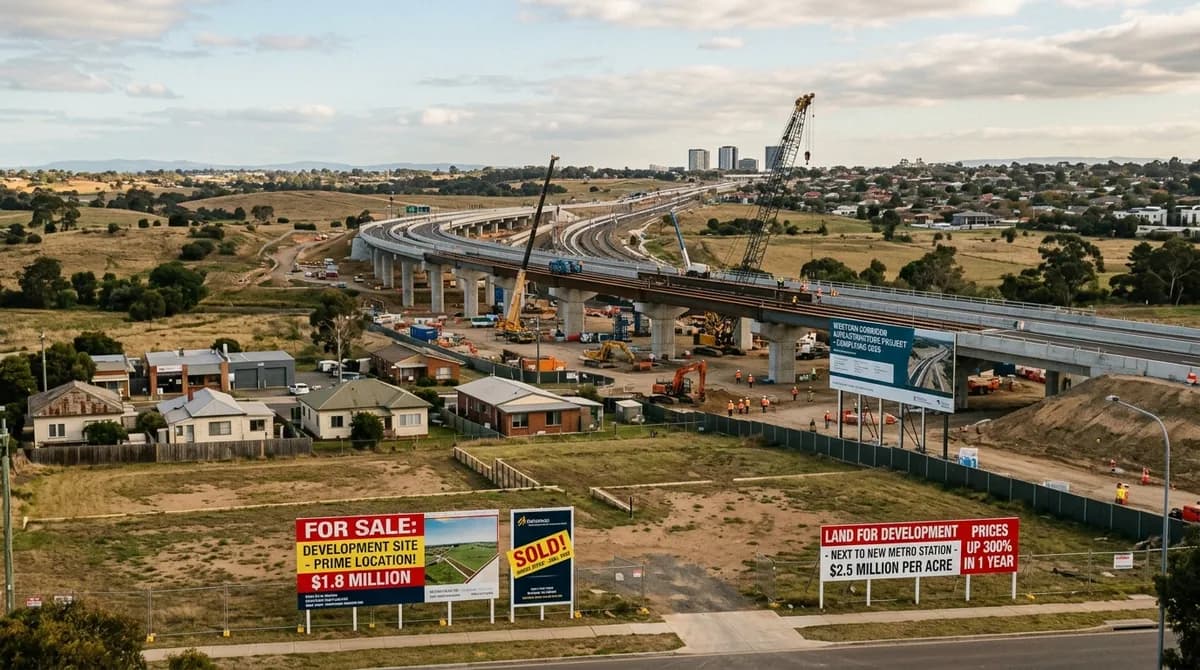
Interestingly, land prices along toll road frontages have the potential to surge by up to 300 percent within a five-year period, especially as information about such projects spreads quickly through social media and property platforms, driving simultaneous competition for land purchases in the same area.
MRT and LRT: A Multiplier Effect Around Station Areas
Properties located within a one-kilometer radius of an MRT, LRT, or commuter rail station tend to see price increases 15 to 25 percent faster than the average price growth in that city. This phenomenon is clearly visible in Transit-Oriented Development (TOD) areas continuing to expand across greater Jakarta.
For instance, the presence of the Jabodetabek LRT is now increasingly felt, with land, landed houses, apartments, and shophouses around stations showing consistent upward price trends, particularly in the Bekasi area, one of the line's key development points.
It's worth noting, however, that the presence of a TOD station alone doesn't automatically drive up land value significantly if it isn't supported by access to other important amenities, as the area's design and land-use integration around the station also determine how much impact the property value increase actually has.
The New Capital City Plan: An Extreme Example of Infrastructure Impact
One of the most striking examples of the impact of large-scale infrastructure projects can be seen in the area surrounding the future Nusantara Capital City (IKN). This phenomenon is clearly visible in the North Penajam Paser region following the announcement of IKN, where land prices were relatively low before the location was officially designated, but surged by hundreds of percent once the news broke — even before large-scale physical construction had begun.
This case demonstrates that infrastructure's impact on land prices doesn't always wait for a project to be fully completed — mere certainty of a plan combined with market expectations can already be enough to trigger a significant price surge.
Changes in Land Use Designation Also Play a Key Role
The government's legal status and land use designation also play a significant role in determining the extent of land price increases, as land initially designated as agricultural or a green zone that later shifts to residential or commercial status can see its price multiply instantly. These designation changes usually occur alongside plans for major infrastructure development in the area.
The Current Property Market Context
While infrastructure remains the primary driver of land price increases in specific areas, it's important to understand that the broader property market doesn't always grow evenly. Bank Indonesia recorded that primary residential property prices grew only 0.62 percent year-on-year in the first quarter of 2026, while sales actually fell 25.67 percent year-on-year, with the majority of primary home purchases still financed through mortgages, accounting for 69.87 percent.
This data shows that amid a fairly selective market, areas with productive infrastructure access are more easily considered by buyers because they offer tangible daily benefits, allowing them to still record above-average price growth.
Other Factors That Determine the Extent of Price Increases
Not all properties near new infrastructure projects automatically see significant price increases, as several other variables also play a role, such as proximity to a toll gate or station, the development of public facilities like schools and hospitals, macroeconomic conditions, and the land's legal status.
Tips for Prospective Investors and Land Buyers
Monitor regional spatial plans (RTRW) to identify infrastructure projects planned in an area, even before physical construction begins.
Pay attention to the ideal distance from infrastructure points, as locations too far away lose appeal, while locations too close risk being affected by noise or congestion.
Thoroughly check the land's legality and status before buying, as land with unclear status carries significant risk even if the price seems attractive.
Take a long-term investment approach, since infrastructure's impact on land prices typically reaches its full potential only a few years after the project becomes operational.
Be cautious of excessive speculation, especially in areas where prices surge purely based on rumors or project plans without strong underlying economic fundamentals.
Conclusion
New infrastructure projects — whether toll roads, MRT, LRT, or plans to relocate a country's center of government — have proven to be one of the most significant factors driving up land prices in surrounding areas. However, the extent of the price increase is heavily influenced by various supporting factors, including proximity to the location, public facilities, and land legal status. For prospective investors and buyers, understanding this pattern early can be key to making better decisions before land prices in promising areas rise too high.
Pemberitahuan Redaksi (Editorial Disclosure)
Artikel di PropertyID disusun melalui proses riset dan penulisan berbantuan teknologi, kemudian ditinjau dan divalidasi oleh tim redaksi sebelum dipublikasikan untuk memastikan keakuratan informasi, khususnya terkait data regulasi, simulasi finansial, dan ketentuan perbankan yang berlaku.
Tim Redaksi
Tim redaksi PropertyID menyajikan berita, analisis, dan panduan properti terpercaya.